Key Benefits
Why Antler Reishi?
Shared Ganoderma Compounds
Ganoderic acids and immunomodulating polysaccharides — the same core compound classes as standard Reishi
Adaptogen Lineage
Member of the clinically-studied Ganoderma lucidum complex, historically used for stress resilience and the HPA axis
Extraction Efficiency
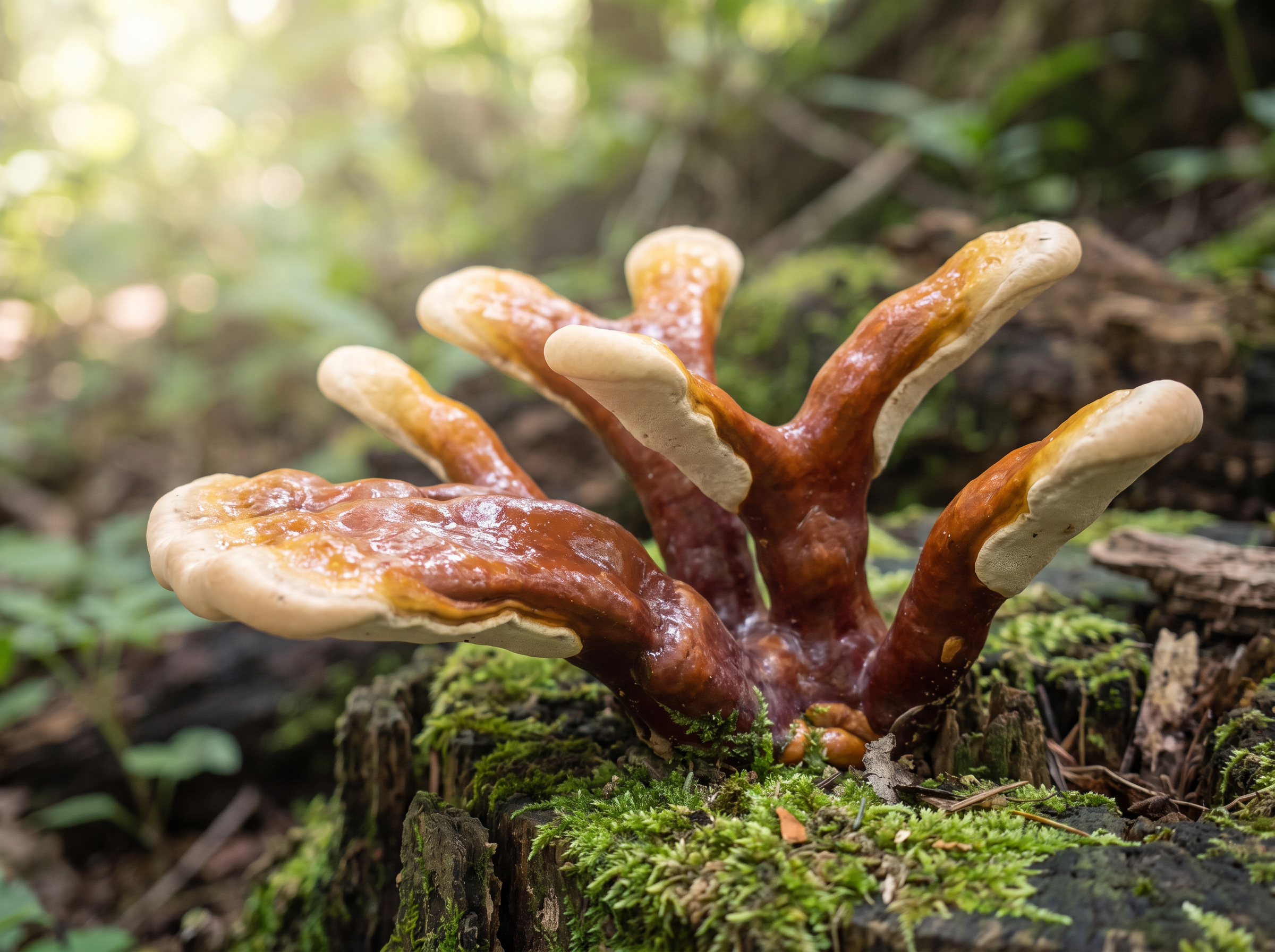
The antler form's branching structure exposes more surface area per gram — preferred by tincture makers for solvent penetration
Distinct Species
Formally separated from G. lucidum only in 2009 via DNA sequencing — a related but scientifically distinct organism
About
What is Antler Reishi?
Antler Reishi grows dramatic branching, stag-horn fruiting bodies instead of the classic kidney-shaped cap. For decades it was sold and studied under the "Ganoderma lucidum" name — DNA sequencing only separated it into its own species, Ganoderma multipileum, in 2009. It shares the same core bioactive compound classes as standard Reishi, but as a distinct species its exact concentrations haven't been directly compared in published studies. A different growing experience from the same medicinal lineage.
Science
Medicinal Properties
As a member of the Ganoderma lucidum species complex, Antler Reishi shares the same core pharmacological categories documented for standard Reishi — ganoderic acids (triterpenoids), beta-glucan polysaccharides, and immunomodulating proteins. Because it was only formally separated into its own species in 2009, exact compound concentrations haven't been directly compared head-to-head against G. lucidum in published studies. The antler form's greater surface area per gram is prized for tincture extraction efficiency.
Beta-Glucan Content
High (triterpenoids + beta-glucans)
Biological Efficiency
5–15%
Cultivation
How to Grow
Colonization matches standard Reishi — slow, at warm temperatures (75–82°F). The difference is entirely in fruiting: while most species need strong fresh air exchange, Antler Reishi requires the opposite — CO2 held above 5,000 ppm throughout fruiting by deliberately limiting FAE. This suppresses cap formation and drives vertical antler growth. Too much fresh air and it reverts to a normal kidney cap. Advanced growers only.
Preparation
How to Use
Not consumed as food — like standard Reishi, the fruiting body is tough and bitter. Best prepared as a dual-extract tincture (hot water + alcohol) or powder. The branching antler form exposes more surface area than a flat cap, which tincture makers report improves solvent penetration and extraction consistency.
Safety
Toxic Lookalikes
Always verify identification before consuming wild mushrooms.
- Ganoderma lucidum
- Ganoderma applanatum