Key Benefits
Why Blue Oyster?
Immune Support
Beta-glucans (25–30% dry weight) activate macrophages and natural killer cells in the immune system
Cholesterol Balance
Natural lovastatin reduces LDL cholesterol — a plant-derived statin equivalent without pharmaceuticals
Anti-inflammatory
Ergothioneine neutralizes free radicals and reduces chronic inflammation at the cellular level
Complete Protein
30% protein by dry weight with all essential amino acids — exceptional nutritional density for a mushroom
About
What is Blue Oyster?
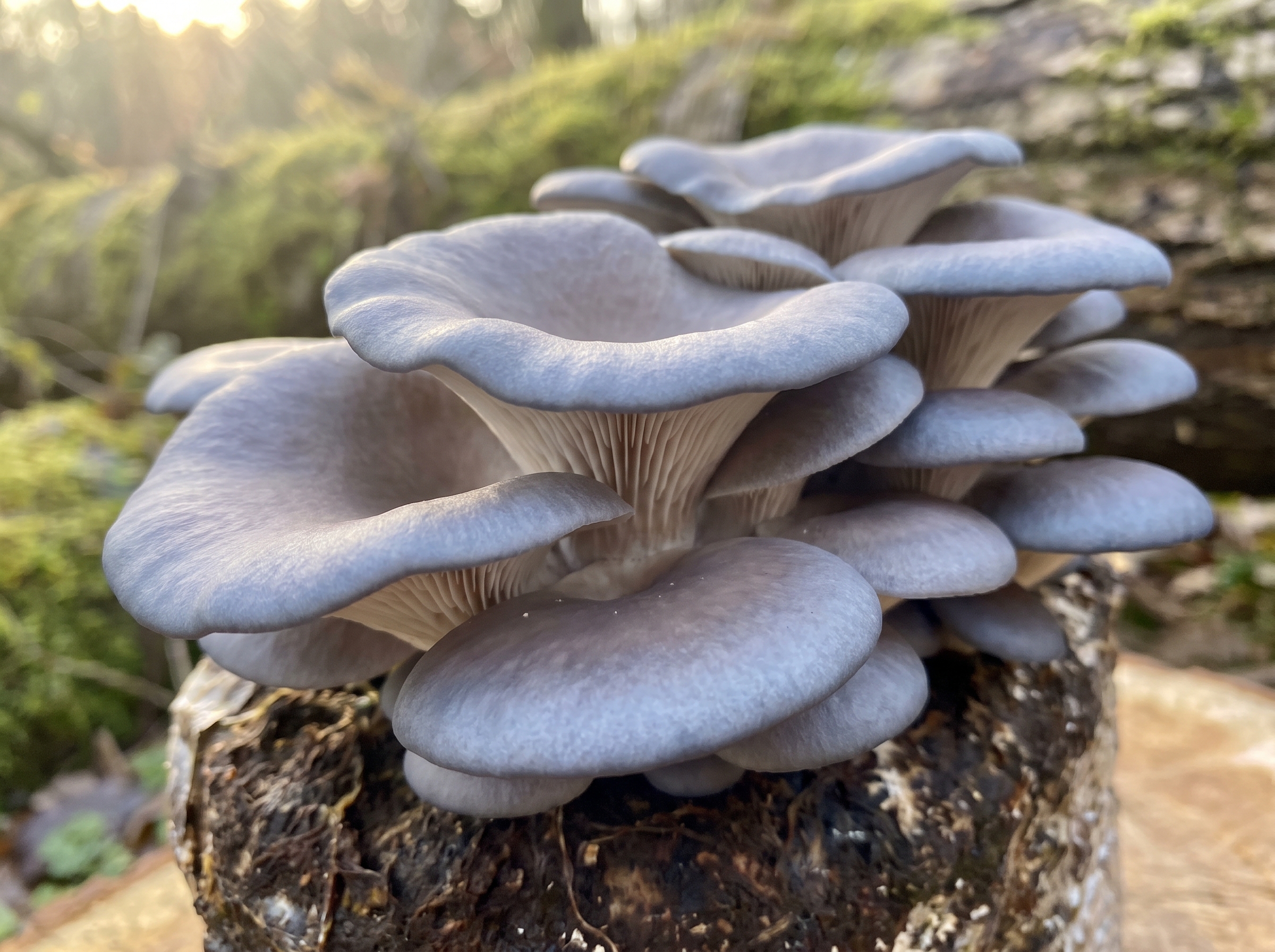
The Blue Oyster is the most forgiving species for beginners. Native to temperate forests worldwide, Pleurotus ostreatus forms beautiful fan-shaped clusters with a blue-grey to cream coloring that deepens in cooler temperatures. It has a mild, slightly sweet flavor with a firm, meaty texture that works across many cooking styles — from stir-fries to pasta.
Science
Medicinal Properties
Rich in beta-glucans (25–30% dry weight), ergothioneine, and natural lovastatin. Clinical studies suggest cholesterol-lowering effects comparable to pharmaceutical statins, immune modulation via macrophage activation, and anti-inflammatory properties. Contains 30% protein by dry weight with all essential amino acids.
Beta-Glucan Content
High (25–30% dry weight)
Biological Efficiency
25%
Cultivation
How to Grow
Blue Oysters thrive in a wide range of conditions. Pack substrate into buckets or bags, inoculate with grain spawn, and wait 2–3 weeks for full colonization. Induce fruiting by introducing fresh air exchange and maintaining 85–95% humidity. Expect 3–4 flushes over 6–8 weeks. Tolerates beginner mistakes better than any other species.
Kitchen
In the Kitchen
Excellent sautéed in butter with garlic, roasted at high heat, or used as a seafood substitute in tacos and stir-fries. The firm texture holds up well to heat. Pairs beautifully with thyme, white wine, cream, and soy sauce.