Key Benefits
Why Cordyceps?
ATP & Energy
Cordycepin increases cellular ATP production — the same mechanism used by the world's most elite endurance athletes
VO2 Max
Randomized trials show 11%+ improvement in VO2 max and time-to-exhaustion in trained athletes after 3 weeks
Immune Modulation
Beta-glucan polysaccharides activate NK cells and macrophages — studied for immune enhancement and anti-tumor activity
Kidney & Vitality
Nephroprotective compounds support kidney function; traditionally used for libido, fatigue, and age-related vitality
About
What is Cordyceps?
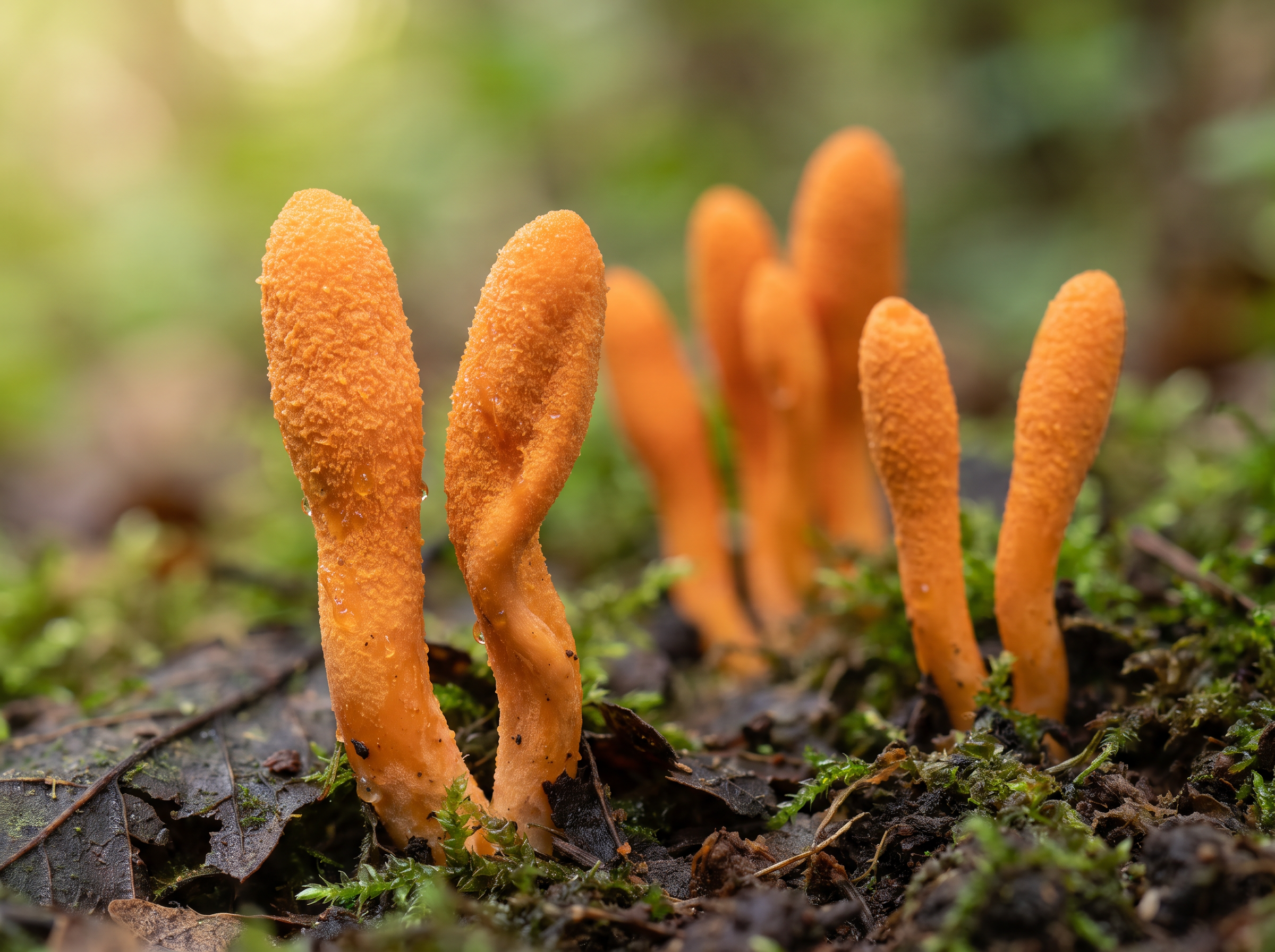
Cordyceps militaris is the cultivatable species behind the legendary Cordyceps performance benefits — without the ethical and ecological concerns of wild-harvested Ophiocordyceps sinensis ($20,000/kg). In the wild, C. militaris parasitizes insect pupae; in cultivation, it grows on sterilized grain or rice, producing the same bioactive compounds — most critically cordycepin and adenosine — through an entirely sustainable lab process. Its vivid orange club-shaped stromata are visually unlike any other cultivated mushroom.
Science
Medicinal Properties
Cordycepin (3'-deoxyadenosine) is the primary bioactive compound — it mimics adenosine in the body, increasing ATP synthesis at the cellular level. Randomized controlled trials in trained athletes show significant improvements in VO2 max, time to exhaustion, and lactate clearance. Also studied for: immune modulation (via beta-glucan polysaccharides), kidney protection (nephroprotective), libido and testosterone support, and anti-aging properties. A 2010 study published in the Journal of Alternative and Complementary Medicine showed 11% improvement in VO2 max vs. placebo.
Beta-Glucan Content
High (cordycepin + adenosine)
Biological Efficiency
50–150g dry per substrate
Cultivation
How to Grow
Cordyceps is one of the most technically demanding cultivated fungi. Colonization occurs on cooked grain (wheat berries or brown rice) over 14–21 days at 65–72°F. Fruiting requires a 12-hour light/dark cycle — light is critical to trigger stroma formation. Maintain 85–95% humidity and 60–75°F. Orange stromata develop slowly over 30–60 days. Harvest when tips show bright orange color, before the white spore layer appears.
Preparation
How to Use
Not typically consumed as a culinary mushroom due to its small fruiting body size and slightly bitter flavor. Best consumed as a powder, capsule, or tincture. The dried stromata can be steeped in hot water as a tea. Dose: 1–3g of powder daily. Pairs well with coffee and chocolate in functional beverage blends.
Safety
Toxic Lookalikes
Always verify identification before consuming wild mushrooms.
- Ophiocordyceps sinensis (wild)
- Isaria farinosa